


Articles
Flooring Trends 2026: When Material, Colour, and Intention Reshape Our Interiors
In 2026, flooring and interior design trends are all about intention, texture and self-expression. We’re moving away from safe formulas, endless neutrals and one-size-fits-all looks. Instead, homes are becoming more thoughtful, more personal and more expressive.
At the heart of it all, the floor is no longer just a background element. It plays a real role in shaping the space, setting the tone and grounding the design of each room.
Between bold design directions and the timeless, durable choices many homeowners still love, here’s what’s coming for our homes and our floors in 2026.
Six key trends to remember
- Natural textures and organic effects taking centre stage.
- Controlled imperfection and surfaces that feel alive.
- Large formats and wall-to-floor continuity for a smoother flow.
- Graphic patterns inspired by classic designs.
- A confident use of colour, from soft tones to deeper shades.
- Wood as a timeless foundation that keeps evolving.
1. Natural Textures and Effects
Among the key flooring trends for 2026, natural textures and effects stand out as an essential foundation. Overly smooth and artificial surfaces are giving way to materials with depth and character. We want to see—and above all, feel—the material.
Sculpted and striated textures take center stage, such as Crayon ceramic with its organic matte finish, Bientina Lustré glazed porcelain, which plays with light through its glossy effect, or Ossona Satiné glazed ceramic featuring subtle architectural reliefs.
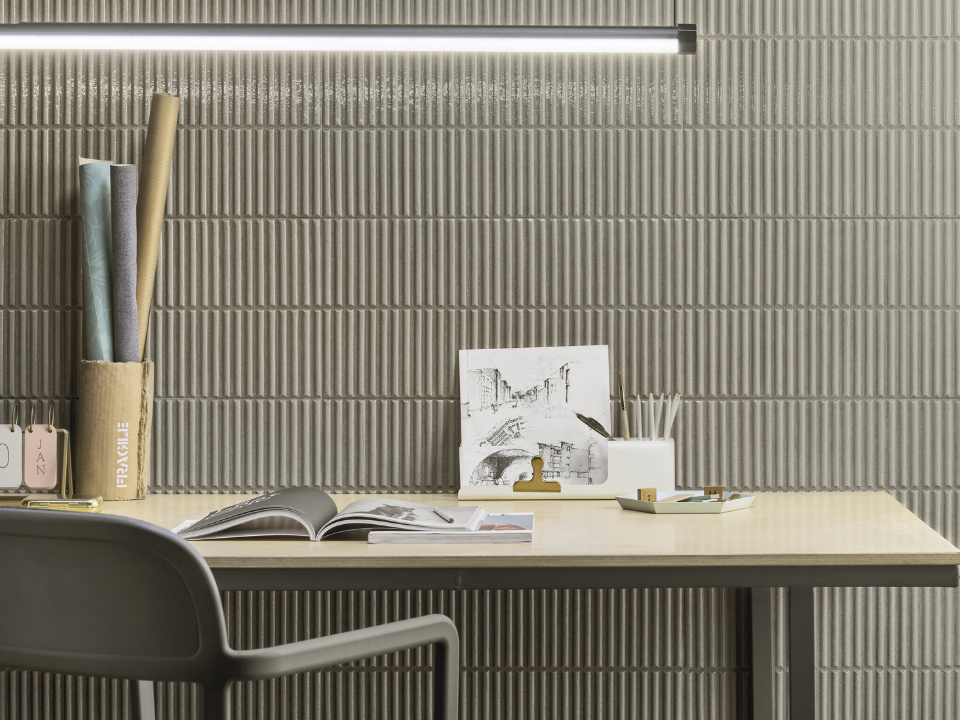
Biophilic design is increasingly influencing interiors, aiming to bring nature indoors and create spaces where well-being goes beyond aesthetics.
When used on flooring, these textures add character without overwhelming the space. They work just as well in minimalist interiors as in more expressive settings, providing a natural, living foundation that anchors and structures the room.
2. Beauty in Imperfection
Continuing the rise of textured surfaces, wabi-sabi emerges as a strong influence in 2026. Rooted in Japanese aesthetics, this philosophy celebrates the beauty of imperfection. In practice, it translates into materials that embrace variation: wood with visible knots, tiles with a handcrafted feel, or raw stone.
In terms of colour, wabi-sabi favours softened palettes—washed blues, patinated greens, powdery terracottas, and nuanced mineral tones.
This imperfect aesthetic often finds its place on walls, backsplashes, or accent areas, where it can fully express itself without overpowering the space. On flooring, it appears through pronounced grain or controlled artisanal effects, adding character while remaining easy to integrate into the overall design.
3. Large Formats and Visual Continuity
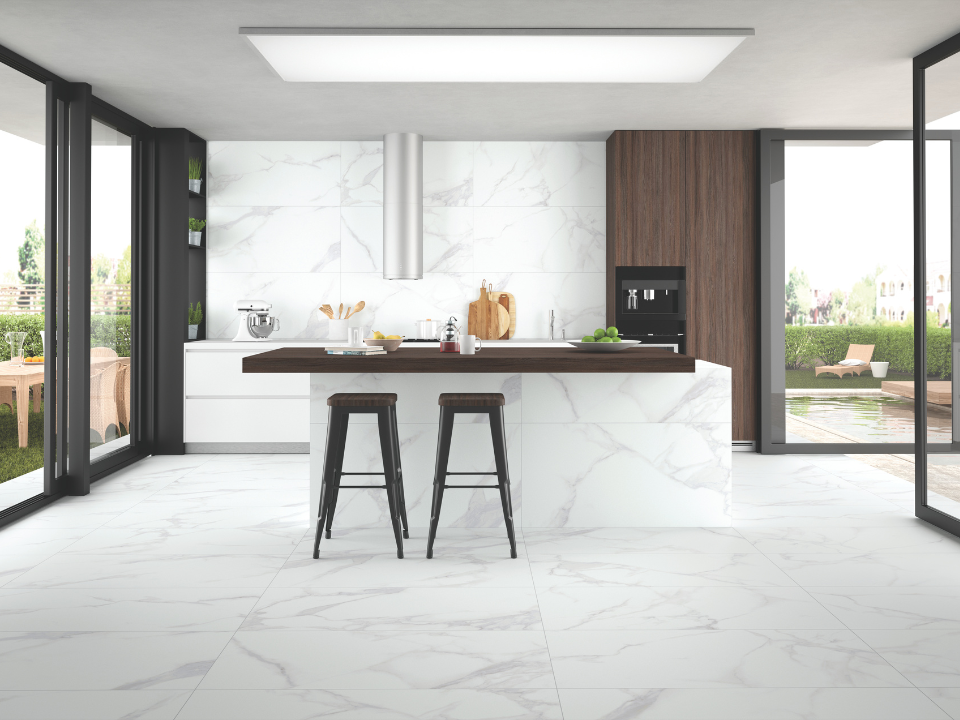
In 2026, interiors are designed to feel larger, calmer, and more cohesive. Floor-to-wall continuity aligns perfectly with this vision. Using the same material on both floors and walls creates a seamless visual envelope—an approach especially popular in bathrooms, entryways, and kitchens for its refined, immersive effect.
Large-format tiles play a key role in this trend. By reducing grout lines, they create surfaces that feel less fragmented and are easier to maintain. On floors, large formats enhance this sense of fluidity, becoming a powerful design tool that visually expands spaces while reinforcing overall coherence.
4. Patterns and Graphic Layouts
In 2026, classic patterns and installation layouts return with a distinctly contemporary language. Inspired by traditional European layouts such as chevron or herringbone, they are now used with greater restraint. This approach echoes Neo-Deco aesthetics, where geometry plays a central role in structuring space, creating rhythm, and guiding the eye.
In practice, this translates into clearly defined geometric layouts applied to understated materials such as wood or stone, in warm, neutral tones. The result is graphic, elegant, and easy to read—without visual overload.
These patterns are often introduced as accents: in an entryway, dining room, a specific flooring zone, or even on a feature wall. Used this way, they become a true visual signature, adding character to a space without multiplying decorative elements.
5. Colour, Maximalism, and Chromatic Immersion
While Pantone’s Colour of the Year has sparked much discussion, interior design trends tell a slightly different story. Benjamin Moore’s Colour of the Year leans toward depth and character, aligning with more expressive and enveloping interiors.
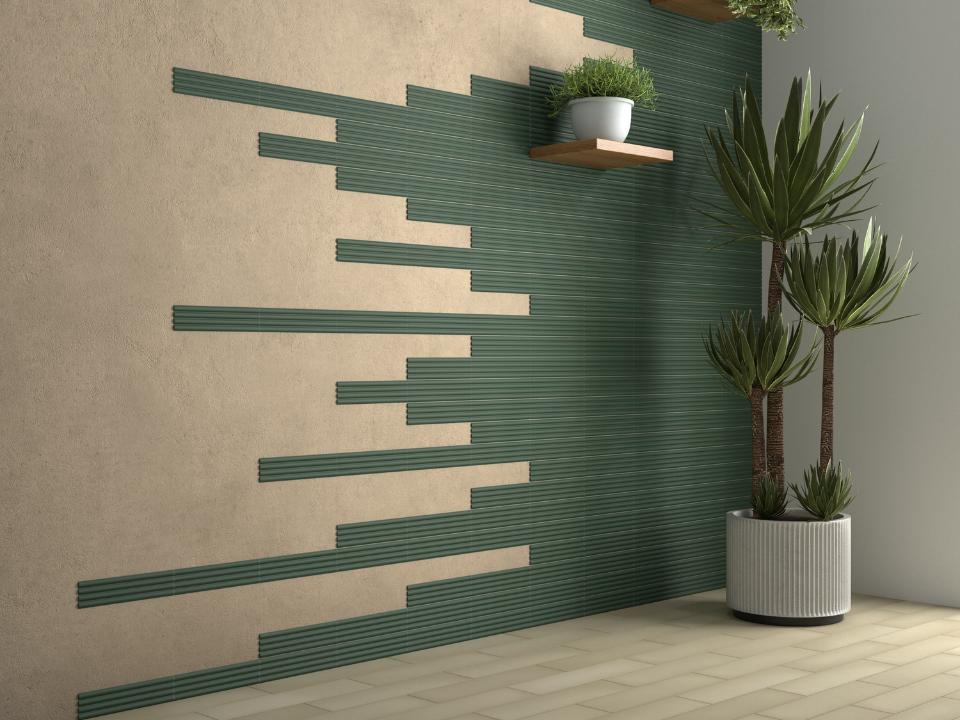
Alongside the softened palettes that structure spaces, saturated colours are emerging as powerful emotional accents. Emerald green, cobalt blue, burgundy, and terracotta bring personality and intensity to any interior.
This is where maximalism, 2026-style, takes shape. Far from excess or accumulation, it favours thoughtful choices: embracing colour, rich materials, and bold patterns—but in a limited number of carefully selected elements. This approach reflects a growing fatigue with overly restrained minimalism and a desire for more personal, expressive spaces.
This shift is accompanied by softer contrasts and tonal, monochromatic compositions. In line with chromatic immersion—often referred to as colour drenching—hues extend across ceilings, mouldings, and doors to create immersive, calming atmospheres. Flooring then becomes a point of balance, capable of supporting both muted palettes and bolder colour statements.
6. Wood as the Anchor of the Interior
In 2026, wood continues to play a central role, while adapting to more expressive interiors. Preference is given to natural-looking woods with matte or oiled finishes that highlight the grain, such as solid maple flooring. Light tones remain popular, but there is also a subtle return of deeper, richer browns.
In a context where colour, texture, and pattern take on greater importance, wood acts as a stabilising element. It balances maximalist-leaning interiors, supports bolder colour palettes, and naturally complements materials such as stone and ceramic.
As a flooring choice, wood provides a warm, timeless foundation—one that evolves with trends while anchoring the space with clarity and coherence.
You might also like
- Kitchen Backsplash Ideas: Reinvent Your Space with Style!
- Which Basement Flooring Should You Choose?
- Decor Tips for a Cozy, Warm Living Room
