


Articles
Everything you need to know about ash flooring
Ash has this special way of catching the light and bringing a calm, soft brightness into a room. Its strong grain gives it a warm, natural look that fits well with its gentle golden glow. Ash hardwood floors are both strong and flexible, so they handle lots of foot traffic while keeping their smooth look.
Whether it’s in the living room, bedroom, or even the kitchen, ash brings a quiet, steady feel. It warms without feeling heavy, and it brightens without taking over. It's a down-to-earth material, perfect for homes that value comfort and simple living.
Key takeaways
- Its marked and expressive grain is a bit like oak, but softer and lighter.
- Its clear, balanced tone adds warmth and depth to a space without weighing it down.
- Strong yet flexible, it stands up well to everyday bumps, making it great for busy homes.
The character of our local wood
Known for its strength and natural elegance, ash grows mostly in eastern Canada and the United States, and it fits our climate really well. Local, durable, and versatile, it’s one of the most trusted species for residential floors.
Often compared to oak for its toughness and expressive grain, ash stands out with a more open texture and a bold grain that catches the light in its own way. Its light colour and gentle relief make any room feel warm and spacious, no matter the style of the home.
People love ash for both its strength and its personality. Bright, welcoming, and built to last, it’s a wood that ages well and keeps its charm over the years.
Bright and lively species
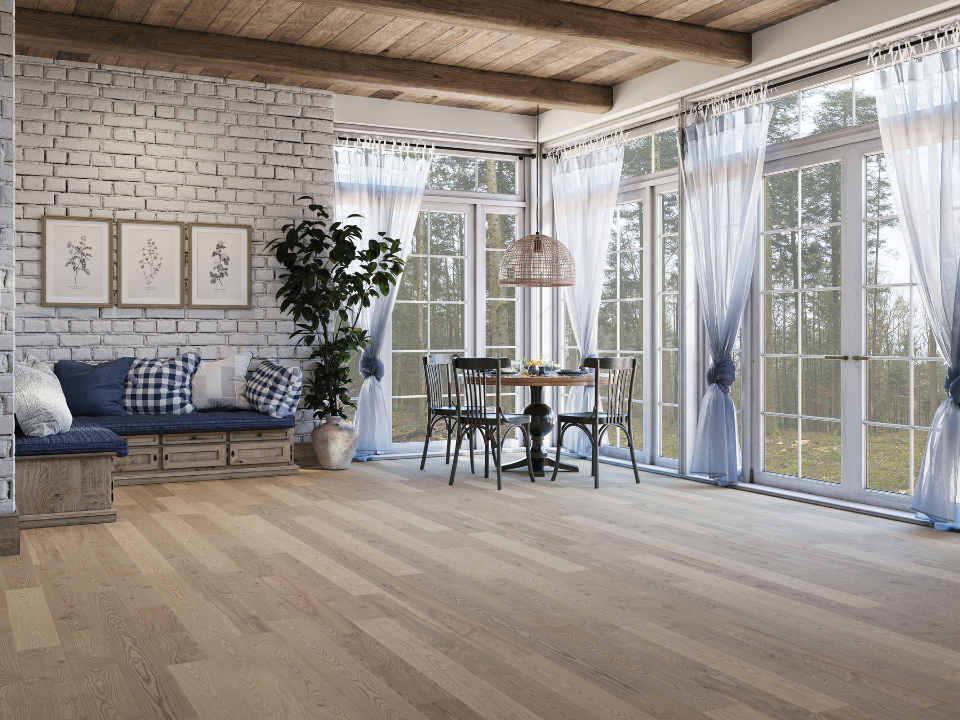
Ash flooring stands out with a clear grain and an organic, textured look. Its straight lines and visible patterns feel a bit like white oak, with a bold, expressive style that gives the floor real character. This marked grain also helps hide small scratches and everyday marks.
From golden beige to light brown, its shades warm up a room with a soft glow. Some ash boards even show a hint of pink or amber. As the wood reacts to light over time, it takes on warmer tones, leaning toward honey or a soft orange, which adds to its natural, lively feel.
Ash works with all kinds of finishes—matte, satin, or semi-gloss—and it can be stained to match the colour and style you’re after. Thanks to this flexibility, it fits just as well in a modern space as in a rustic or Scandinavian-inspired décor.
Strong and flexible at the same time
Ash is a tough and reliable hardwood, with a Janka hardness of about 1320, close to white oak. It handles bumps and everyday wear really well, which makes it a great choice for busy living spaces.
Its structure mixes strength with a touch of flexibility. This little bit of give helps it absorb impacts without cracking easily, which is handy in high-traffic areas. It's also what gives ash that natural, comfy feel under your feet, a bit less stiff than some denser species.
Like all hardwoods, ash is still sensitive to too much moisture. so it’s best to avoid heated floors and damp basements. In a stable environment, it keeps its shape, its look, and its strength for many years.
Solid hardwood or engineered ash?
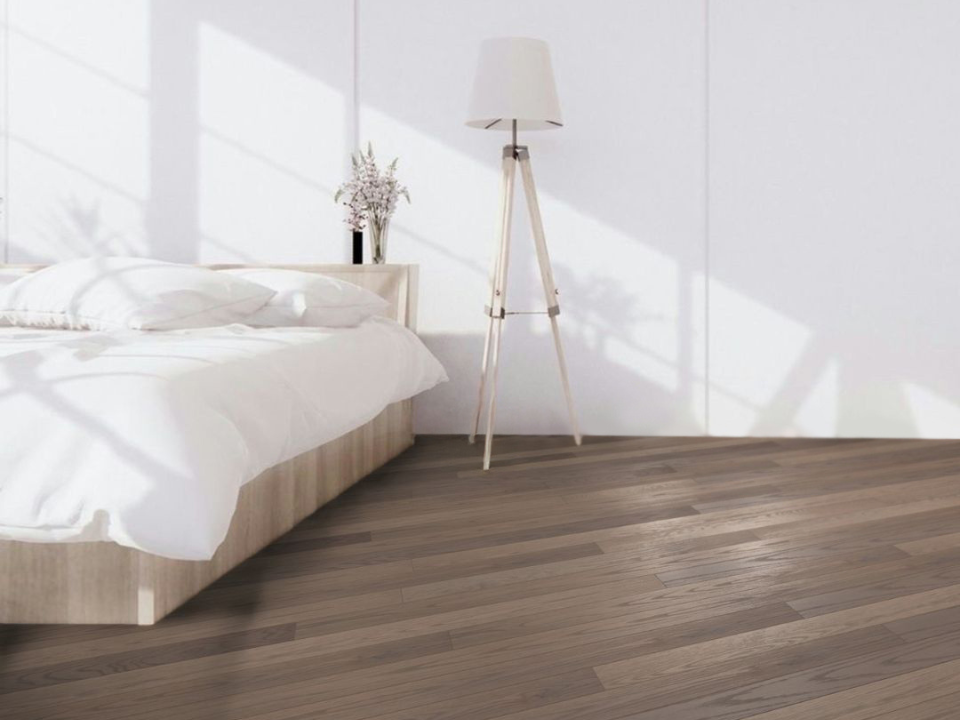
Ash comes in two builds, and each one meets different needs. Solid ash wood is cut from a single piece of real wood. It gives the most natural feel underfoot, ages well, and can be sanded and refreshed several times over the years. It costs more to buy and install, but it’s a long-lasting investment that really stands the test of time.
Engineered wood, on the other hand, uses a thin layer of real ash over a fibre-wood core. This design makes the floor more stable and less affected by moisture changes, which is great for ground-floor rooms or concrete slabs. It's often lower cost makes it a practical and accessible option.
In both versions, the charm of ash stays the same: bold grain, lively tones, and a natural look that never goes out of style. Your choice mostly depends on where you’ll install it, your budget, and how much long-term durability you’re looking for.
What to know before buying
Ash is a medium-dense wood, which makes it easy to work with and simple to install. Its look stays quite even, so it’s a great choice for people who prefer a clean, steady appearance instead of something very high-contrast. It offers great value for money: strong, durable, and cost-effective over time. The price depends on the type of floor you choose, but it usually stays affordable compared to other hardwood species.
Like most light woods, ash reacts to sunlight. Over time, its tone can warm up a little from UV rays, shifting toward more golden shades. This slow change often adds to its natural charm.
For a floor that stays stable and durable, it’s best to let the wood acclimatise to the room before installation and to trust the work to professionals.
Caring for an ash floor
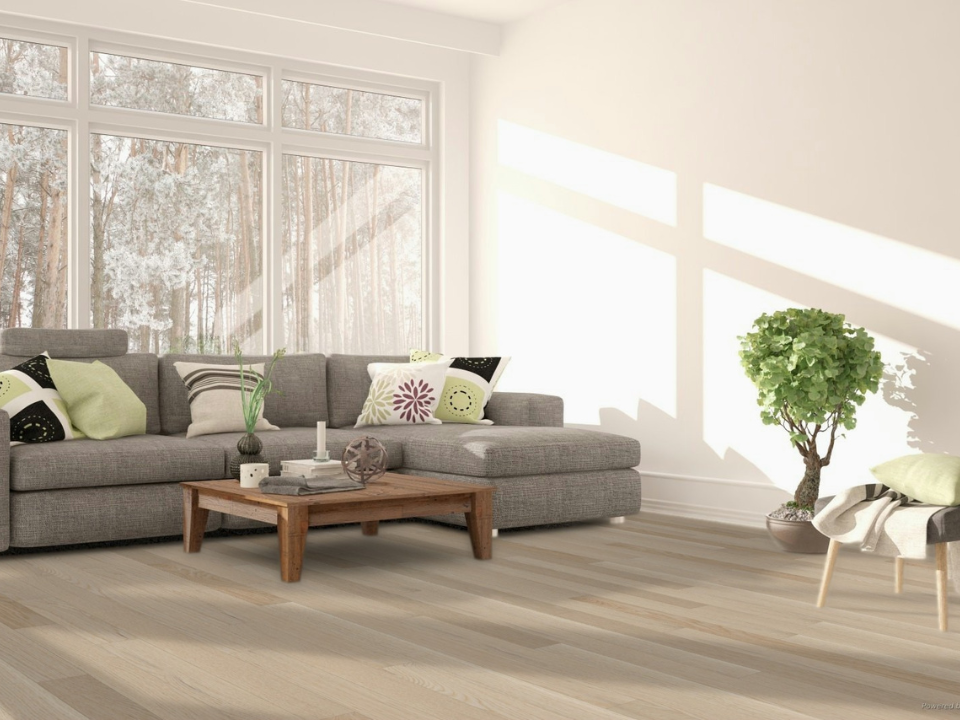
Ash doesn’t need any special treatment, but regular care helps keep it looking its best. Its bold grain hides small everyday marks well, making it more forgiving than some lighter species.
A quick sweep or a pass with the vacuum is enough to stop dust and grit from scratching the surface. For washing, a lightly damp cloth and a gentle cleaner do the job.
Avoid too much water, oily or abrasive products, and keep the wood out of harsh direct sun. A finish with UV protection, or simple touches like curtains or rugs, helps slow down the warming of the colour over time. If the floor loses a bit of shine after a few years, sanding or refinishing will bring back its original glow with no trouble.
A home essential at the heart of your space
With its expressive grain and light tone, ash brings a presence that’s both gentle and confident. Strong, flexible, and easy to live with, it ages well and keeps its charm year after year. It's a true, inviting hardwood, made for spaces where people love to spend time.
Let the Déco Surfaces team guide you to the ash floor that fits your home just right.
You may also like
- Everything You Need to Know About Acacia Flooring
- Hickory Hardwood Floor: Everything You Need to Know
- All About Maple Hardwood Flooring
